Held this year in Istanbul from 27 to 29 April 2026, the ITS European Congress is the leading event in the ITS sector. Organised by ERTICO – ITS Europe, the project coordinator of ZEV-UP, the event brought together policymakers, researchers, industry stakeholders and innovators to discuss the future of smart, connected and sustainable mobility. ZEV-UP was proud to participate again in this year’s edition to showcase its ultracompact, zero emission Battery Electric Vehicles (BEVs) aiming to revolutionise urban mobility.
The ZEV-UP demo vehicles in the spotlight
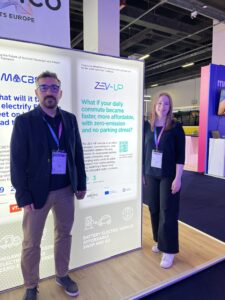
ZEV-UP had a strong presence throughout the event. Visitors to the ERTICO, Ford Otosan, and FEV stands had the opportunity to learn about the project’s objectives and developments and exchange directly with our partners for more technical information about the vehicles.
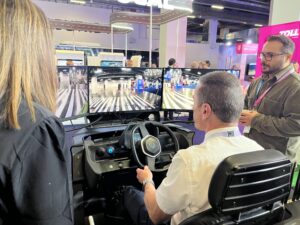
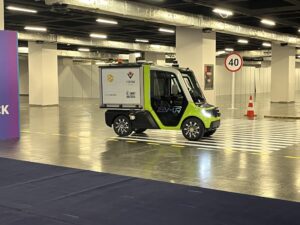
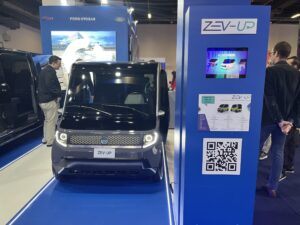
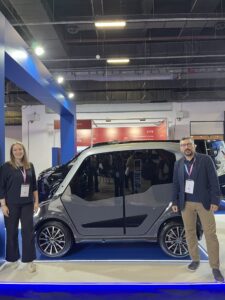
A highlight of the congress for the project was the live demonstrations of its ultracompact vehicles. A four-seater demo vehicle was on display at the Ford Otosan stand, showcasing a practical vehicle for families in urban areas. A two-seater commercial demo vehicle was also operating in the dedicated demonstration area, illustrating the vehicle’s potential for small businesses and last-mile delivery. A teleoperation console was set up at the ERTICO stand, offering visitors a practical look at the remote-control capabilities, offering them a unique chance to drive the vehicle from a distance.
Live webinar: The EU projects behind the demo vehicles
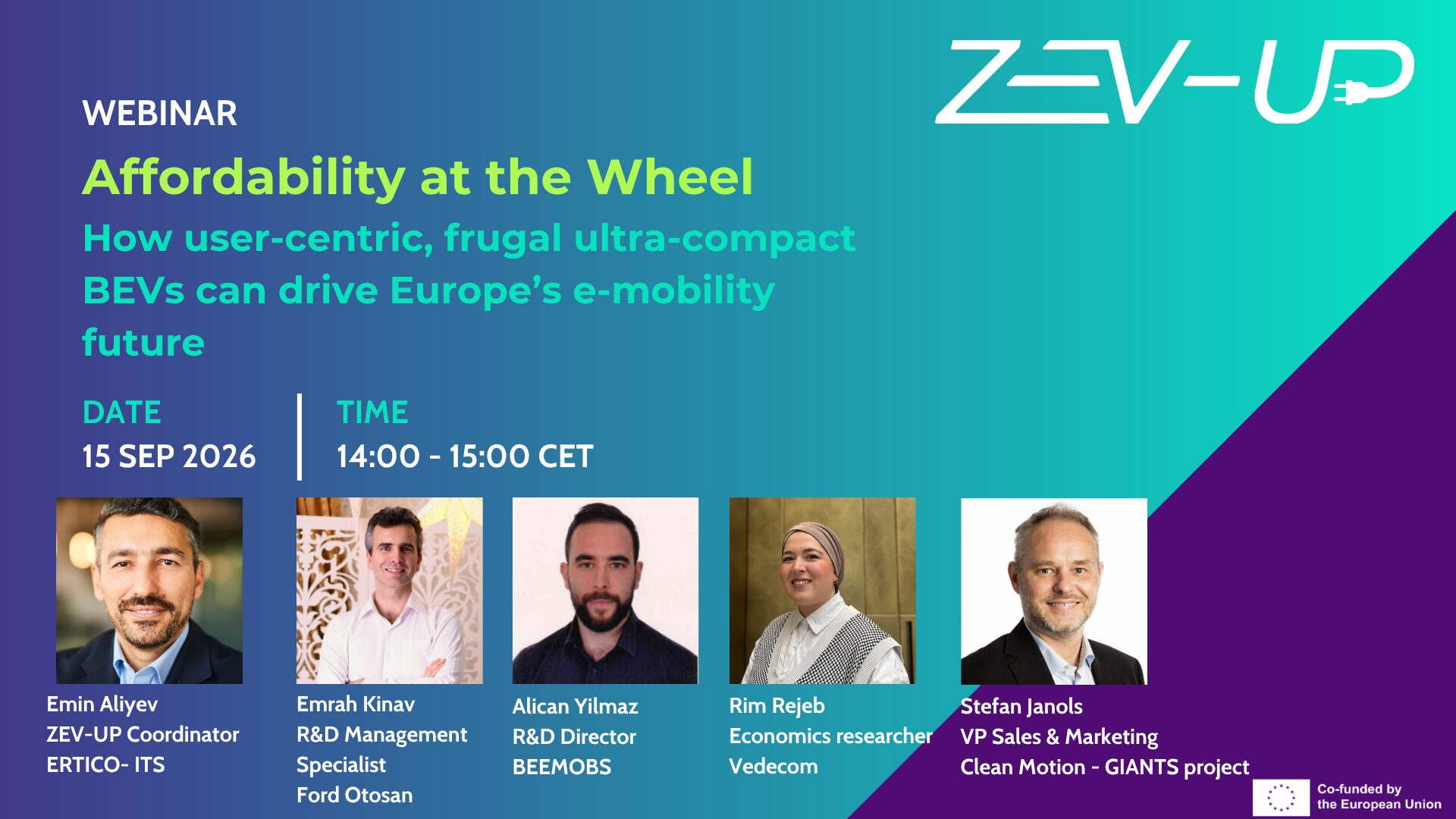
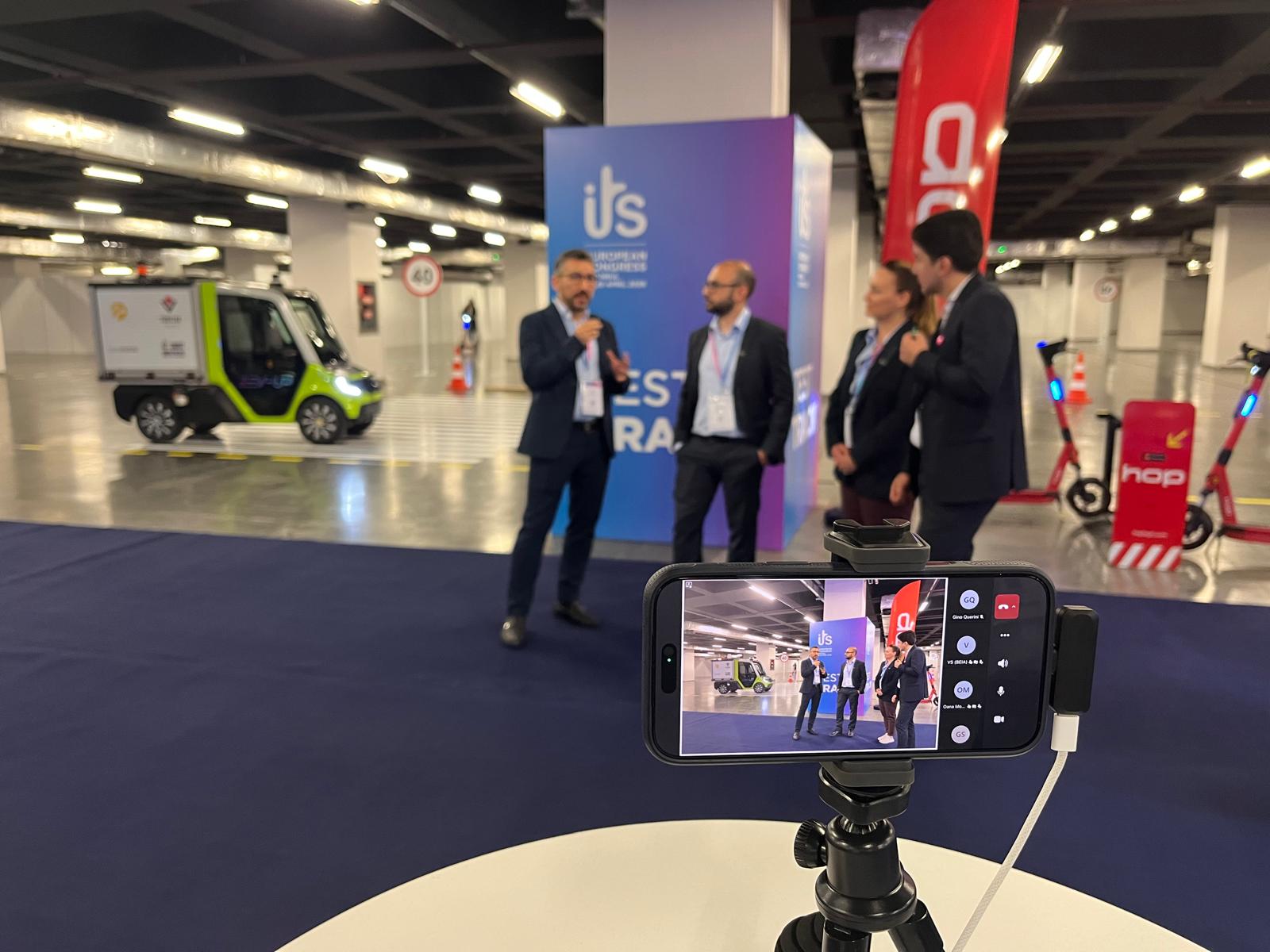
On the first day of the congress, ZEV-UP took part in a live webinar streamed directly from the demonstration area. Represented by its coordinator, Emin Aliyev (ERTICO – ITS Europe), ZEV-UP joined EU-funded projects EvoRoads, FRODDO and Enhancing Automated Valet Parking (EAVP) for an hour-long online session covering urban and green mobility, road safety and transport optimisation. It was a practical way to extend the reach of the event beyond the congress floor and bring ZEV-UP’s work on ultracompact zero-emission vehicles to a wider audience.
SIS 10: The Future of Inclusive European Mobility
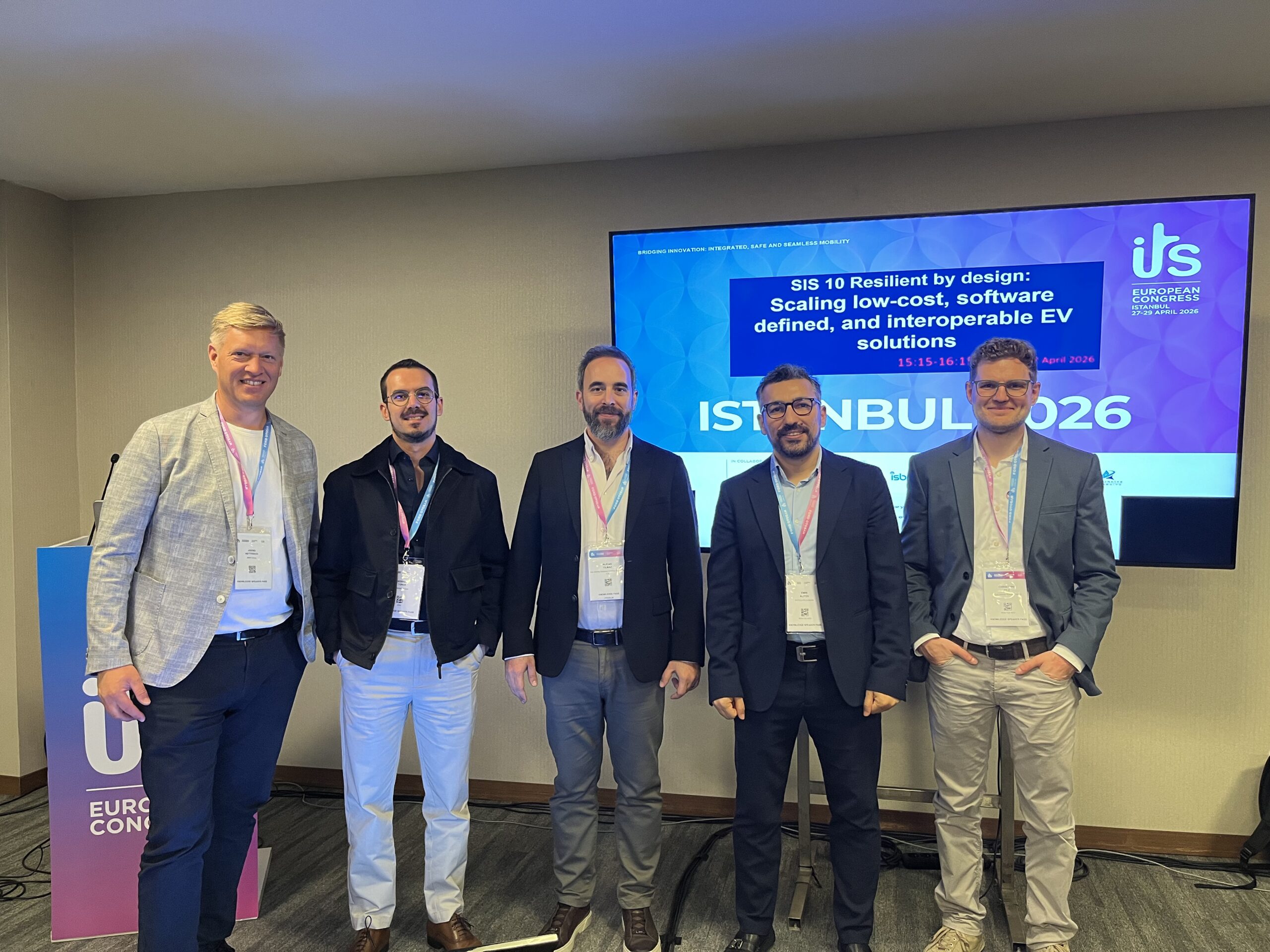
ZEV-UP contributed to the Special Interest Session 10 “The Future of Inclusive European Mobility: Software-defined, interoperable, and smart”. The session explored innovative electric mobility solutions and approaches that serve everyday mobility needs and contribute to more sustainable mobility. These included Software-Defined Vehicles (SDVs), gamification to help change user behaviour, as well as the regulatory framework to enable bidirectional charging in Europe. Moderated by ZEV-UP Coordinator, Emin Aliyev, the session included insights from Christoph Pilz (Virtual Vehicle / GIANTS project), Jörg Hetterich (BMW), and Görkem Türer (E-Mobility Europe).
In the session, ZEV-UP was represented by Alican Yilmaz (Beemobs). ZEV-UP aims to redefine urban mobility. Dense urban areas face specific mobility challenges, including lack of space, limited charging options, fragmented regulations for smaller vehicles, oversized vehicles and energy waste. The technology is there but a problem remains: how we move within cities. Reducing the size of vehicles and proposing affordable options is therefore essential. This is why ZEV-UP is developing an affordable ultracompact electric vehicle, adapted to real-world usage. The ZEV-UP vehicle is a safe, flexible, and modular option, available in three variants to cater to diverse user needs.
ZEV-UP research takes the stage
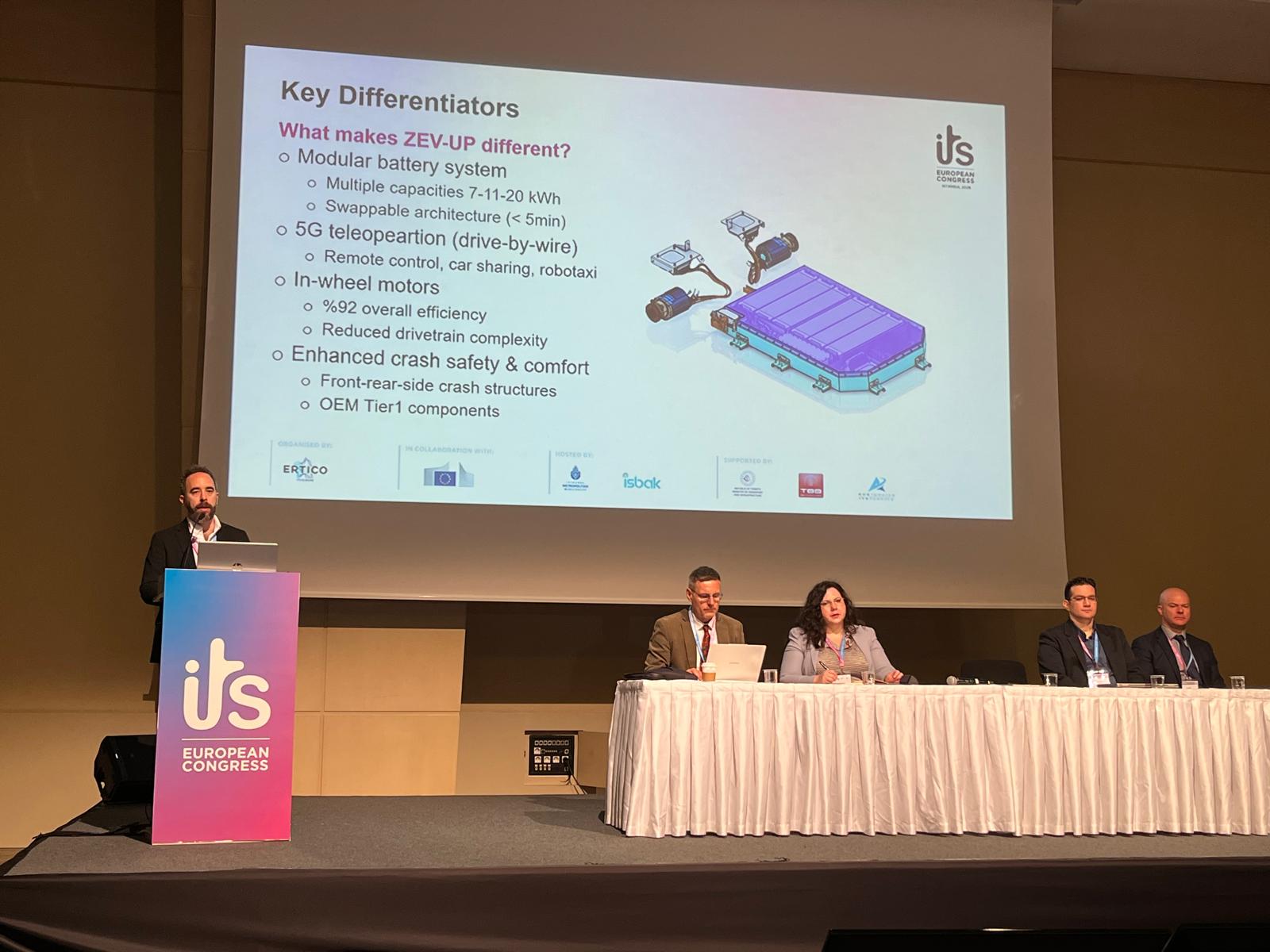
The conversation continued during the technical session TP4 “User-centric design and acceptability in emerging mobility modes”, where ZEV-UP presented two papers.
The first, “Positioning a New Generation of Compact BEVs: The ZEV-UP BEV for Urban Mobility“, was presented by Alican Yilmaz (Beemobs). The paper highlights safety, flexibility and modularity as the three core design pillars of the ZEV-UP vehicle and presented the technical specifications of the ZEV-UP vehicles, which include a modular and swappable battery system, 5G teleoperation, in-wheel motors, and enhanced crash safety and comfort. The vehicles address key urban mobility gaps, including affordability, usability and scalability, while also enabling new business models, such as BaaS and teleoperation-based services.
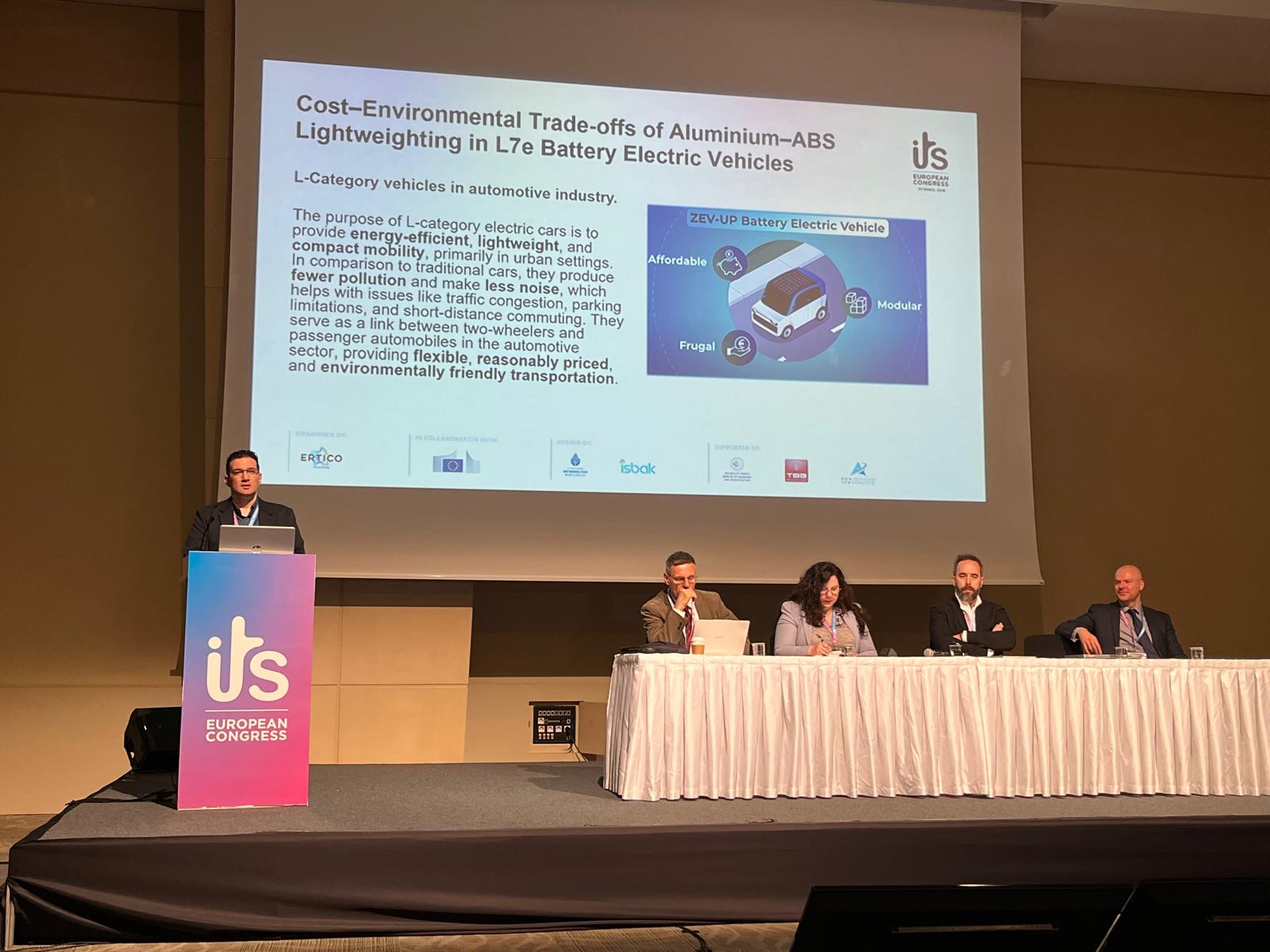
The second paper, “Cost–Environmental Trade-offs of Aluminium–ABS Lightweighting in L7e Battery Electric Vehicles“, was presented by Mustafa Asan (FEV). The paper presents the material choices made in the ZEV-UP vehicle’s construction. The ZEV-UP approach combines an aluminium structure with ABS plastic to achieve a vehicle that is both lightweight and durable. Aluminium was selected for its ability to reduce vehicle weight, improve energy efficiency and offer strong recyclability possibility, while ABS plastic is valued for being lightweight, durable and similarly recyclable. Together, these material choices reflect ZEV-UP’s commitment to building compact electric vehicles that are efficient not only in use, but across their full lifecycle.
See ZEV-UP in action and watch the highlights from the ITS European Congress 2026 below.